
BMC/BU Education and Training Programs and Support
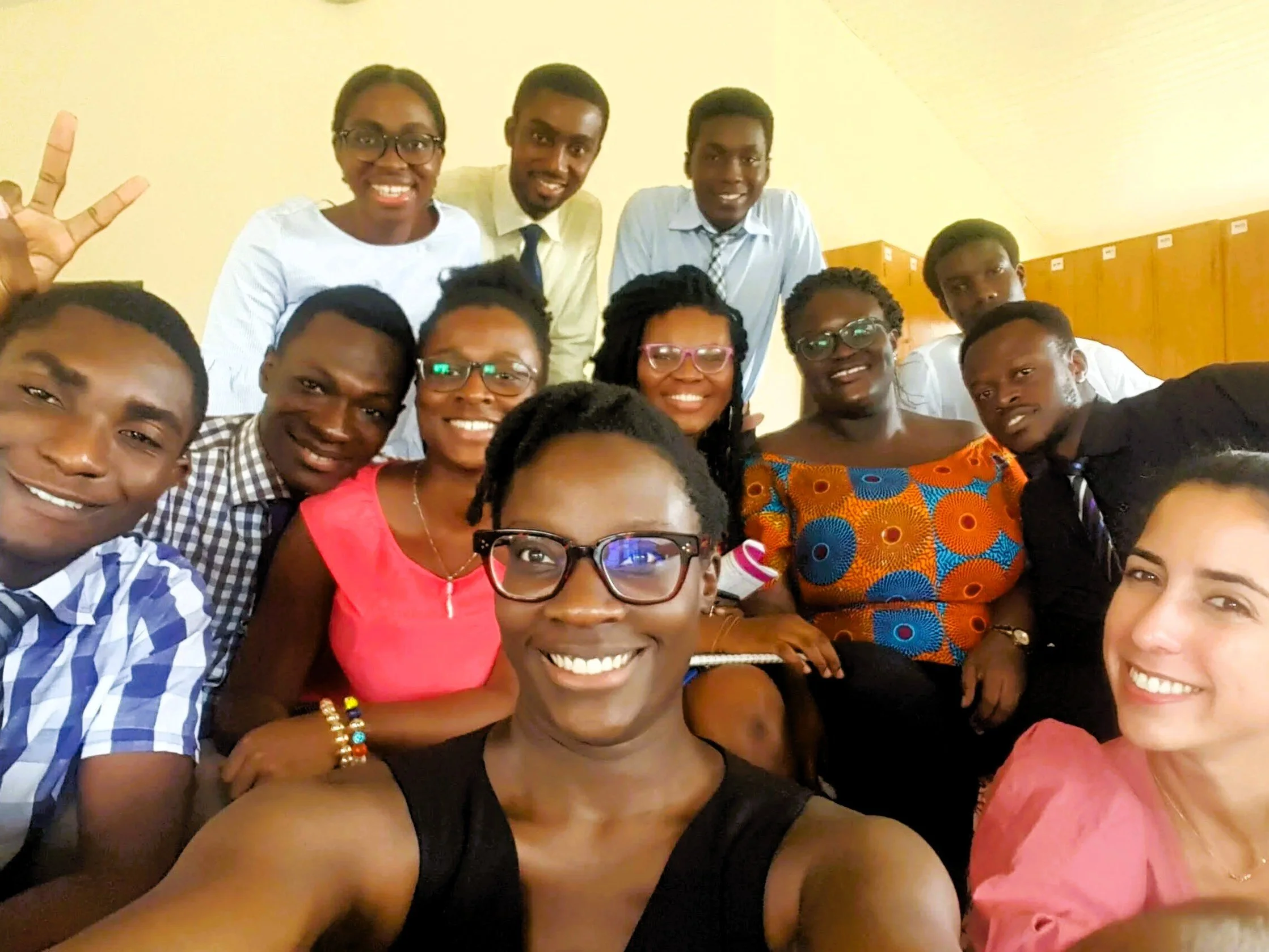
The BUMC Psychiatry Residency program has three extracurricular pathways for residents interested in additional training and scholarly work, including the Global, Local, and Cultural Psychiatry Pathway led by our GLCMHD Director, Dr. Maria Prom. Pathway residents participate in core and supplementary didactics specific to each pathway topic. Each program is tailored to a resident’s interest so that they may develop topic expertise beyond the scope of general adult psychiatric residency training, contribute to expanded knowledge in that topic locally/nationally/internationally, and hone their career goals.
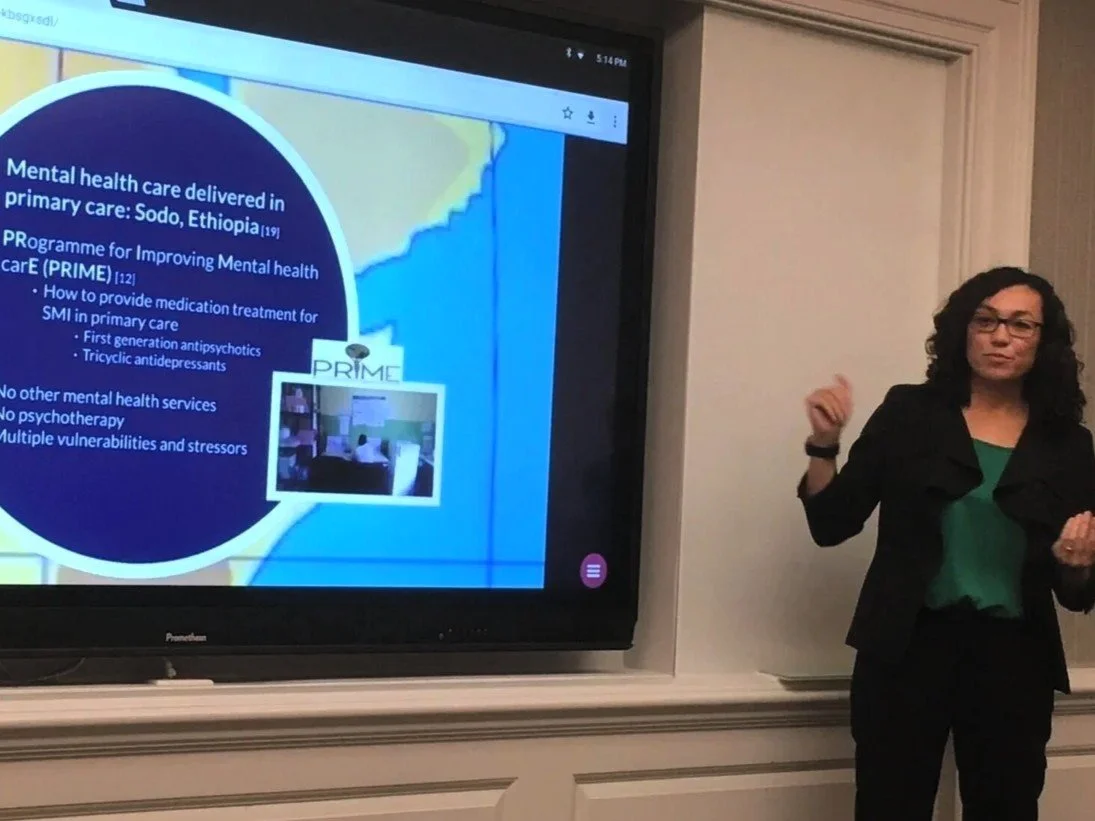
A resident on the Global-Local Pathway attends didactics on cultural psychiatry and then uses these constructs to contribute to culturally specific projects in mental health understanding or practice either locally, globally, or both. They are encouraged to participate in collaborations that are longitudinal and bidirectional. They are assigned a mentor with expertise in global or local cultural psychiatry to assist them with honing their project skills and developing career goals. Residents are provided the opportunity to present their scholarly work at an end-of-the year resident Department of Psychiatry Grand Rounds hosted by the GLCMHD.
Residents who have completed the Global-Local Pathway have reflected on their enriching experiences at a variety of international training sites including Ghana, South Africa, Peru, and more through reflective blog posts published on the GLCMHD website.
Global, Local, and Cultural Psychiatry Pathway
The objective of the National Institute of Mental Health-funded Boston University Medical Campus-Massachusetts General Hospital (BUMC-MGH) T32 Global Psychiatry Clinical Research Training Program is to develop independent clinical scientists who can address the most pressing global mental health challenges. Postdoctoral fellows will be prepared to work collaboratively across disciplines and cultures in order to respond to the substantial burden of mental health related diseases in low- to middle-income countries and resource-limited areas, and to develop strategies that advance global delivery and scale-up of mental health services, improve general wellbeing, and foster overall country development.
The postdoctoral fellowship is a three-year training program that combines rigorous didactic instruction, clinical research methods training from Boston University and Harvard University, practice in working effectively with disadvantaged communities, and immersive, mentored clinical research experiences in global settings. Each postdoctoral fellow is selected from a deep pool of clinical and research talent. They are mentored by a diverse group of faculty who are recognized leaders in major psychiatric subspecialties as well as clinical research approaches.
Fellows complete a mentored research project at an international training site in Barbados, Ethiopia, Peru, South Africa, Uganda or Ukraine in topics such as addictions, mood disorders, psychotic disorders, PTSD/trauma/complex emergency, HIV mental health, women’s health, and childhood disorders. In addition to these topics, there is a research methods core made accessible to fellows consisting of faculty with extensive experience in clinical trials, qualitative/quantitative research, and implementation science.
Fellows utilize a variety of research skills and techniques to understand the scope of a problem, and develop innovative interventions that are feasible, and culturally and clinically relevant to the specific environments and populations. At the end of the third year of the program, fellows are expected to be well situated to submit a K-award application. With heavily circumscribed clinical responsibilities, trainees will focus on the refinement of their research projects, developing international collaborations, and strengthening their clinical research skills.
BUMC-MGH T32 Global Psychiatry Clinical Research Training Program
International Research Training Sites
Each international training site can accommodate up to two fellows and offers space to fellows while overseas as well as administrative support while at the training sites. Fellows have the option of choosing from the following eight training sites spanning across six countries.

Addis Ababa University
Addis Ababa, Ethiopia
The Department of Psychiatry at Addis Ababa University has research offices in both Addis Ababa and Butajira. The Department offers T32 fellows the ability to collaborate with in-country partners to research locally relevant urban and rural mental health issues, including psychotic disorders, HIV-related mental health, and mood disorders.

Barbados Nutrition Study Research Centre
St. Michael, Barbados
The Barbados Nutrition Study is an ongoing longitudinal study of over 48 years linking the impact of breastfeeding and postpartum depression on mental health in youth and the long term effects of early childhood malnutrition on the prevalence of cognitive, behavioral, and health problems lasting into adulthood and into subsequent generations.

Mbarara University of Science and Technology
Mbarara, Uganda
The Department of Psychiatry at Mbarara University of Science and Technology has conducted research on suicide, HIV and mental health, traditional medicine, addiction psychiatry, mood disorders, psychosis, and quality of care.

National University of Kyiv-Mohyla Academy
Kyiv, Ukraine
The Center for Mental Health and Psychosocial Support at the National University of Kyiv-Mohyla Academy is committed to working alongside T32 fellows to support research that focuses on trauma, supervision, community-based intervention, and related topics.

Stellenbosch University
Stellenbosch, South Africa
The Department of Psychiatry at Stellenbosch University houses several research groups focused on adolescent stress and trauma, clinical neuroscience, posttraumatic stress disorder, serious mental illness, substance use disorders, and the genomics of brain disorders.

University of Cape Town
Cape Town, South Africa
The Department of Psychiatry and Mental Health at the University of Cape Town conducts research focused on key clinical problems relevant to the South African context, including behavioral and neuropsychiatric aspects of HIV/AIDS, substance use disorders, PTSD, and mental health policy and services.

University of KwaZulu-Natal
Durban, South Africa
The Department of Psychiatry at the University of KwaZulu-Natal offers research opportunities to T32 fellows with special emphasis on psychiatric epidemiology, first-episode psychosis, cross-cultural issues in mental health, mental health care services development, and the neuropsychiatric manifestations of HIV/AIDS.

Universidad Peruana Cayetano Heredia
Lima, Peru
The Universidad Peruana Cayetano Heredia School of Medicine provides maternity services to low-income women residing in Lima, and serves as a unique opportunity for research studies examining perinatal mental health through a life course perspective.